
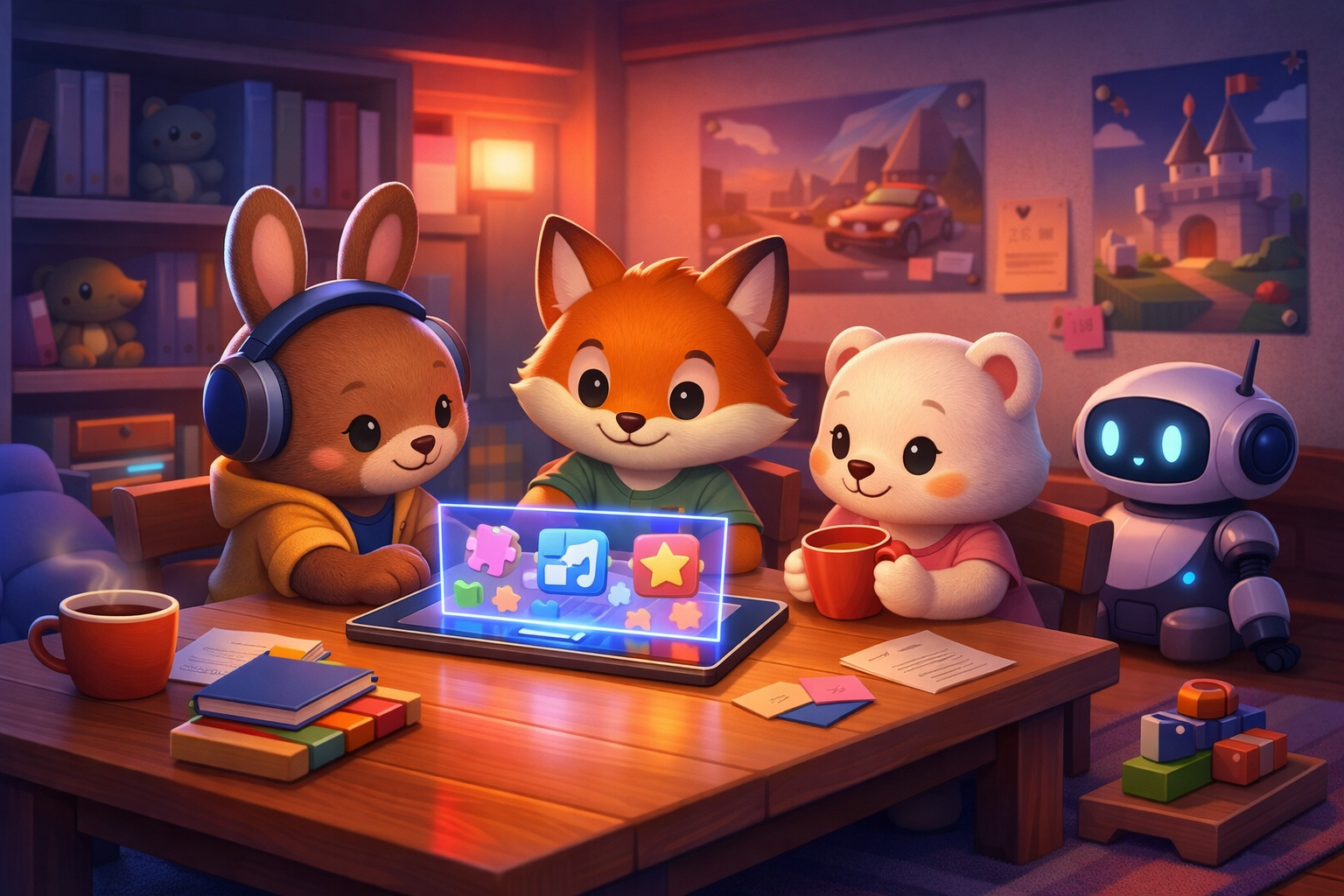
Many children’s games today rely on loud sounds, fast animations, and constant visual stimulation to capture attention. While this approach may work short-term, it rarely leads to meaningful or lasting engagement.
In contrast, calm games for children are built around emotional comfort, gentle pacing, and thoughtful interaction. These games don’t fight for attention — they earn it. As a result, children stay engaged longer, feel safer while playing, and learn more naturally.
Stimulation vs. Engagement in Calm Games for Children
Loud games often depend on overstimulation:
- rapid visual effects
- sharp sound cues
- constant rewards
This creates quick reactions but also leads to fatigue and loss of focus.
By design, calm games for children prioritize:
- curiosity instead of urgency
- emotional safety instead of pressure
- clarity instead of chaos
Children don’t just react — they remain present and involved.
How Overstimulation Reduces Engagement
Young children are still developing attention control and emotional regulation. Overstimulating game environments can result in:
- shorter play sessions
- difficulty processing instructions
- irritability after play
- reduced motivation to return
That’s why calm games for children consistently show stronger long-term engagement than louder, more chaotic alternatives.
Why Calm Games for Children Support Longer Play Sessions
1. Predictability Creates Emotional Safety
In calm games for children, transitions, sounds, and reactions are consistent. This predictability helps children feel safe, allowing their brains to focus on exploration rather than self-protection.
2. Slower Pace Improves Focus
A measured pace gives children time to:
- understand what is happening
- repeat actions
- explore without rushing
This naturally extends playtime and deepens engagement — a core advantage of calm game design.
3. Gentle Audio Reduces Stress
Soft sound design and clear voices help children stay attentive without overwhelming their senses. This is one of the defining features of effective calm games for children.
4. Emotional Comfort Encourages Return Play
Children are more likely to return to digital experiences where they feel relaxed and confident. Calm, well-paced games often become part of daily routines rather than one-time sessions.
Calm Games for Children Are Not Boring
A common misconception is that calm equals boring. In reality, well-designed calm games for children still include:
- playful characters
- rewarding interactions
- curiosity-driven mechanics
- emotional feedback
The difference lies in balance, not in the absence of fun.
The Role of Characters in Calm Games for Children
Characters play a central role in maintaining calm engagement.
In calm games for children, effective characters are:
- emotionally predictable
- friendly and supportive
- expressive but not exaggerated
Instead of loud celebrations or constant alerts, these characters respond with gentle smiles, nods, or encouraging gestures — helping children stay engaged without pressure.
Why Calm Games for Children Support Better Learning
Learning requires mental space. Calm environments help children:
- listen carefully
- repeat actions without fear of mistakes
- stay focused longer
- engage in speech, problem-solving, and creative play
This makes calm games for children especially effective for early learning and language development.
How Dancing Animals Applies a Calm Games for Children Approach
At OGW, we intentionally design Dancing Animals using principles inspired by calm games for children.
Our approach includes:
- soft 2.5D visuals with warm lighting
- smooth, slow animations
- gentle sound design and clear voice guidance
- emotionally supportive character reactions
- learning moments that feel like play, not tasks
This calm-first philosophy allows children to stay engaged longer — through comfort, not overstimulation.
What Parents and Educators Are Observing
More parents and educators report that calm games for children:
- keep kids engaged longer
- make transitions away from screens easier
- reduce post-play restlessness
- support more balanced emotional states
These observations align with both research and modern game design practices.
Conclusion
Loud games may capture attention quickly, but games for children build engagement that lasts.
By prioritizing emotional safety, thoughtful pacing, and supportive character design, calm digital experiences create healthier environments — where children feel confident, curious, and ready to learn.
At OGW, we believe the future of children’s games isn’t louder.
It’s calmer, smarter, and more human.
If you’d like to explore more insights about the creative process, check out
👉 App Store Privacy for Kids Apps: What Developers Need to Know
👉 Cloudflare Outage on November 18, 2025: A Severe Online Crash
👉 We’ve recently released Dancing Animals app — a calm learning game inspired by the principles described above.
Feel free to explore it yourself.
👉 Join the community of parents who believe in smart play — follow OGW on Discord , Instagram, TikTok, YouTube, Facebook or LinkedIn and stay updated on our next educational projects.
Leave a Reply