
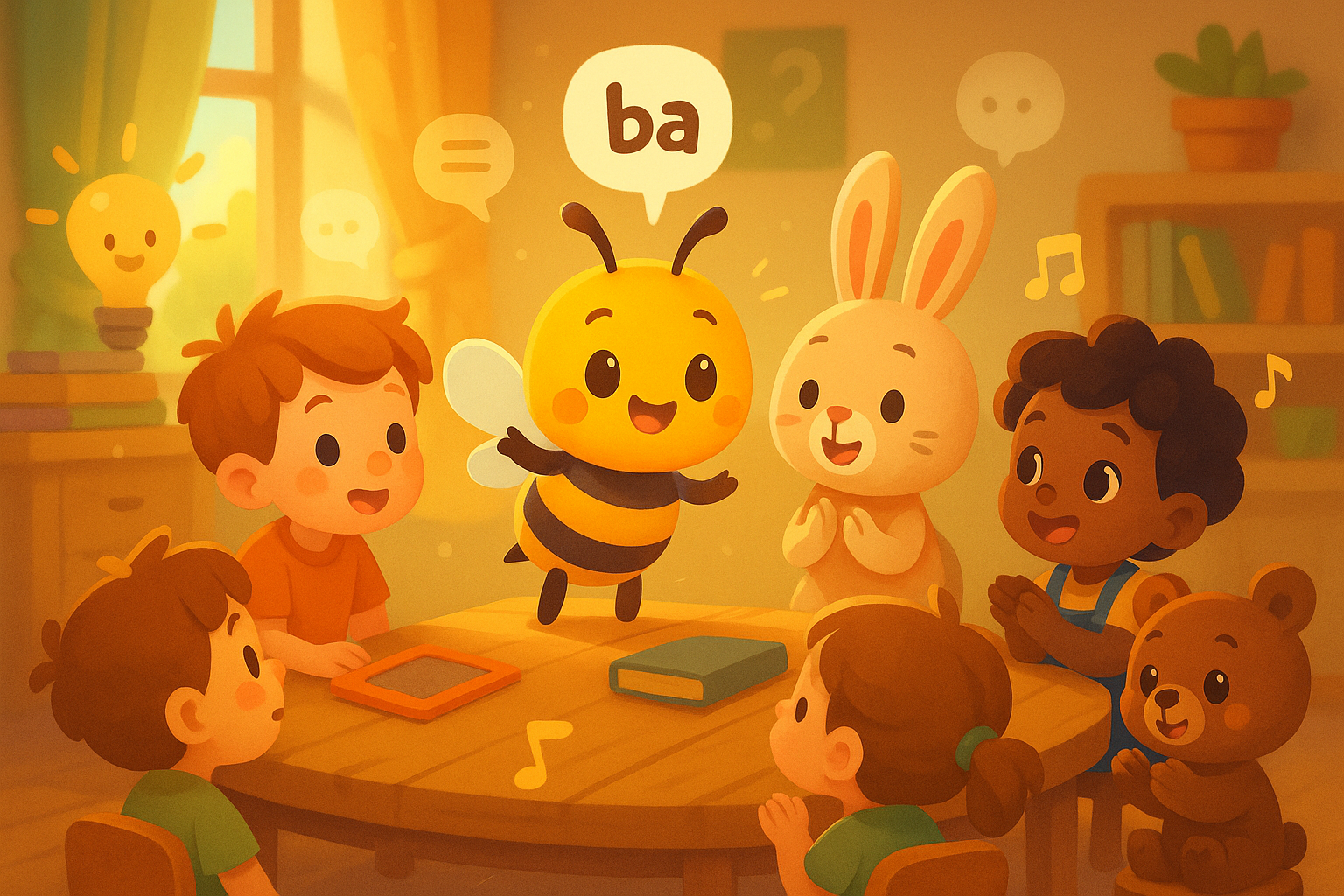
1. Imitation — The Foundation of Speech Development in Children
Children develop speech by copying:
— sounds
— gestures
— syllables
— facial expressions
— tone
A friendly character who speaks slowly, clearly, and expressively becomes an ideal model for imitation—without pressure or stress.
2. Intonation Cues That Strengthen Speech Development in Children
Characters can:
— stretch syllables
— emphasize rhythm
— articulate clearly
— speak softly and melodically
This helps children understand the structure of speech and improves articulation.
Intonation modeling is especially helpful for:
— children learning English or another second language
— kids with delayed speech development
— improving volume control
— teaching questions vs statements
— building phonological awareness
3. Play-Based Mini Dialogues That Enhance Speech Development in Children
Speech develops faster in interactive scenarios than in passive listening.
Game characters can lead small dialogues, such as:
— “Can you repeat after me?”
— “What color is this star?”
— “Say baa like a little sheep!”
— “What do you think happens next?”
Even simple responses—sounds, syllables, short words—are meaningful steps in speech development in children.
4. Positive Emotional Reinforcement and Its Impact on Speech Development
Characters reward children with:
— smiles
— animations
— claps
— playful sounds
— emojis or hearts
Positive reinforcement builds confidence, which is critical for speech development in children.
Warmth helps speech flourish; overstimulation does the opposite.
What Scientific Studies Say About Speech Development in Children
Stanford University
Children speak 30–40% more in interactive play with characters than during passive cartoon watching.
MIT Media Lab
Responsive characters (those who react to the child’s voice or actions) significantly increase verbal engagement.
Harvard Graduate School of Education
Children remember words better when paired with emotional cues like smiles, gestures, and praise.
University of Washington
Kids participate twice as actively in speech during interactive play than during typical speech drills.
What Types of Characters Best Support Speech Development in Children
Educational design is intentional. The most effective speech-supporting characters share these traits:
1. Simple Shapes + Big, Clear Emotions
Children process simple designs faster, which supports attention and speech attempts.
2. Expressive Facial Cues
Smiles, bright eyes, and clear emotional expressions help children understand tone and improve speech imitation.
3. Slow, Smooth Movements
These reduce cognitive load, making it easier for kids to focus on speech.
4. Warm, Friendly Personality
Children speak more when they feel safe—essential for speech development in children.
Characters should be:
— calm
— encouraging
— gentle
— predictable
5. Clear, Soft Voice
The ideal educational character speaks:
— slowly
— clearly
— melodically
— with emotional warmth
This directly stimulates speech development through natural imitation.
How Dancing Animals Supports Speech Development in Children
OGW’s Dancing Animals is built with speech development as a core pillar.
1. Characters as Intonation Models
Each character has a unique:
— tone
— melody
— rhythm
— expression
This helps children understand different speech patterns.
2. Interactive Reactions Strengthen Speech Development
When a child imitates a sound or tries to speak:
— the character smiles
— gestures
— nods
— dances
— shows simple celebratory animations
This reinforces the idea that their speech matters and motivates more verbal output.
3. Play-Based Micro-Lessons
Each mini-scene promotes speech development in children through playful tasks:
— “Repeat this sound!”
— “Make the same noise as this animal!”
— “Say the color!”
— “Sing this short melody!”
These are natural, stress-free speech opportunities.
4. 2.5D Visual Style + Soft Lighting
Warm, morning-like lighting creates a calm emotional environment where speech flows more easily.
5. Smart Learning Elements
We use:
— light bulb icons
— guiding gestures
— expressive glances
— subtle animations
All of these gently support verbal participation without overwhelming the child.
How Parents Can Strengthen Speech Development in Children Through the Game
1. Play 10–20 Minutes Together
Even observing the child brings educational value.
2. Comment on the Character’s Speech
Examples:
— “Did you hear that sound?”
— “He said baa! Can you say it too?”
— “Look how he smiles when you talk!”
3. Celebrate Progress
Positive reinforcement creates a motivation loop essential for healthy speech development.
4. Use the Game in the Morning
Children learn language more effectively when they are emotionally rested.
Conclusion
Game characters are powerful tools for speech development in children.
They combine voice, emotion, interaction, and design to create a safe, playful space where children want to speak—and that desire fuels rapid learning.
OGW continues building Dancing Animals as a world where children grow their speech, confidence, emotional intelligence, and creativity through joyful play.
If you’d like to explore more insights about the creative process, check out
👉 Mobile Gaming Report 2025: Insights Across The Key Markets
👉 Cloudflare Outage on November 18, 2025: A Severe Online Crash
👉 Join the community of parents who believe in smart play — follow OGW on Discord , Instagram, TikTok, YouTube, Facebook or LinkedIn and stay updated on our next educational projects.
Leave a Reply